
Materials Guide
Press'n Seal vs Cling Wrap: What's the Difference?
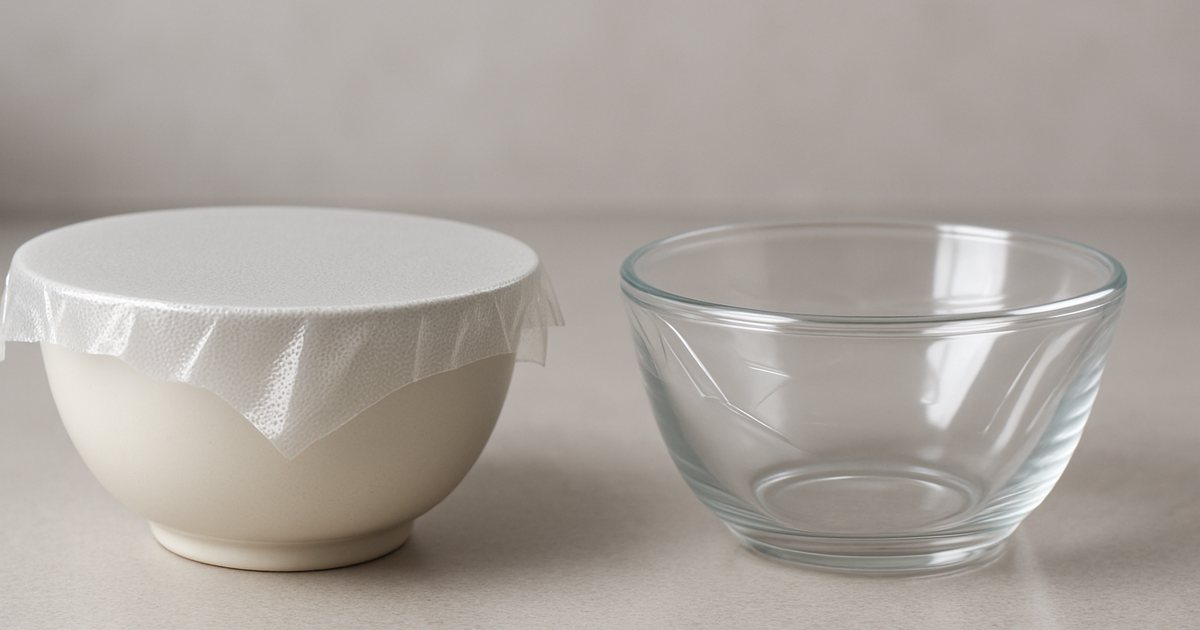
Press’n Seal vs Cling Wrap: What’s the Difference?
Last Updated: 2026-10-14
Quick answer: Cling wrap and Press’n Seal hold on in two different ways. Cling wrap (PVC or PE film, about 8–15 microns) clings by contact. The soft, smooth film grips glass, metal and itself without any glue. Glad Press’n Seal is a thicker polyethylene film covered with tiny raised dimples, with a pressure-sensitive adhesive hidden in the valleys between them. Press it and the dimples collapse, so the adhesive bonds to almost any dry surface. That makes Press’n Seal better for sealing bowls made of plastic, paper or wood. Cling wrap is cheaper, clearer, and better on wet or greasy surfaces and at commercial volumes.
We manufacture PVC and PE cling film in China. We do not make adhesive sealing wrap, so this comparison isn’t selling you either side. What we can add is the factory view: what each film is made of, how thick it is, and why one costs 4–8 times more than the other per square foot.
Key takeaways
- Different mechanisms. The original P&G patent describes a ~25 µm (0.001 in) LDPE film with dimples about 0.15 mm high on a 1.27 mm grid, roughly 460 dimples per square inch, and adhesive in the valleys. Cling wrap is 8–15 µm with no adhesive.
- About 2× the film. A 25 µm PE film weighs ~23 g/m² before any adhesive is added. A typical 10 µm PVC cling film weighs ~12.5 g/m² and Glad’s cling wrap about 7 g/m².
- Cost per square foot: Press’n Seal ≈ $0.04–$0.07, branded cling wrap ≈ $0.015–$0.045, foodservice PVC film ≈ $0.007–$0.013.
Three Products, Confusing Names: Press’n Seal, Cling’n Seal and Saran Wrap
Many searches compare “Press’n Seal vs Cling’n Seal” or ask whether “Cling’n Seal is the same as Saran Wrap”. Here is how they line up:
- Glad Press’n Seal is the adhesive sealing wrap. It is the only one of the three that uses glue.
- Glad Cling’n Seal is a name Glad has used for its ordinary cling wrap. It is a PE cling film, the same category as Saran Wrap.
- Saran Wrap in the US is now also a PE cling film. It was PVDC until about 2004. Our cling wrap vs Saran wrap vs plastic wrap explainer covers the history.
So “Cling’n Seal vs Saran Wrap” compares two PE cling films that differ mainly in thickness. “Press’n Seal vs anything else” compares adhesive with cling, which is a real difference.
How Press’n Seal Works: The Dimple-and-Adhesive Patent
Press’n Seal grew out of the Clorox–Procter & Gamble Glad joint venture, which was formed in January 2003. P&G contributed its film technology to the venture. The core design is described in US Patent 5,662,758, “Composite material releasably sealable to a target surface when pressed thereagainst” (P&G, filed January 1996, now expired). The patent describes:
| Parameter (from the patent) | Preferred value | Metric |
|---|---|---|
| Base film | 0.001 in LDPE (range 0.0005–0.0015 in) | 25.4 µm (12.7–38 µm) |
| Dimple base diameter | ~0.025 in | ~0.64 mm |
| Dimple spacing (center to center) | ~0.050 in, triangular grid | ~1.27 mm, ≈460 per sq in |
| Dimple height | ~0.006 in | ~0.15 mm |
| Adhesive | Water-based latex, pressure-sensitive when dry, ~0.001 in | ~25 µm |
| Collapse resistance | Holds shape under ~0.4 psi | ~2.8 kPa, so the roll can be wound |
The dimples stand taller than the adhesive layer. A light touch only meets the dimple tips, so the film handles like a non-sticky sheet. Pressing with a finger collapses the dimples straight down, which brings the adhesive into contact with the surface. The adhesive is deliberately mild, so the wrap peels off and can usually re-seal a few times.
A patent shows the design, not the exact production spec. We have not measured Glad’s current film. Still, the numbers explain what you feel: the wrap is thicker, slightly hazy and textured, and it does not stretch the way cling film does.
Need a clear, stretchy film that clings to trays and bowls at foodservice cost? We make 8–15 µm food-grade PVC cling film and PE cling film in retail boxes and 2,000 ft cutter boxes. Request a quote →
How Cling Wrap Holds On (No Adhesive)
Cling wrap gets all of its grip from the film itself.
- PVC cling film contains roughly 20–30% plasticizer, usually DEHA or ATBC. The plasticizer makes the whole sheet soft enough to flow into the microscopic roughness of glass, steel, ceramic and even polypropylene tubs. Our DEHA vs ATBC plasticizer guide explains the chemistry.
- PE cling film is harder. A tackifier, commonly polyisobutylene, migrates to the surface and provides the cling. That works well on glass and metal and poorly on plastic containers.
In our factory we measure this as peel cling force. In our stickiest cling film tack test, 12–14 µm PVC food film measured 25–35 N/m against 8–15 N/m for tackified PE of the same gauge. Cling of any strength is a surface effect, though, and a ring of moisture, oil or flour on a bowl rim weakens it. Press’n Seal has the opposite weakness: its adhesive needs the surface to be dry and clean, and Glad’s own directions say so.
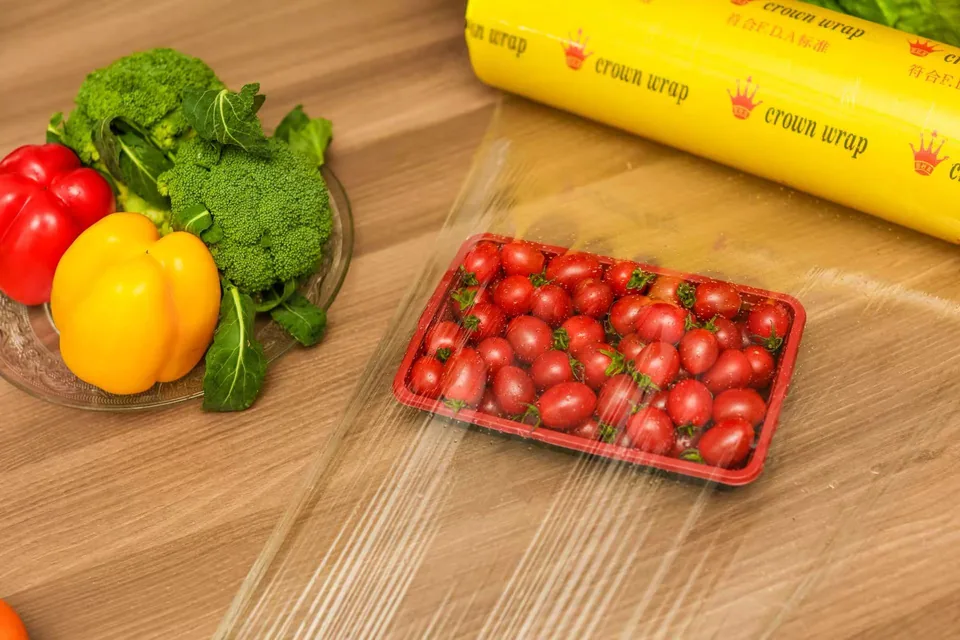 PVC cling film clings by contact. There is no adhesive, so nothing is left behind on the bowl.
Head-to-Head Comparison Table
| Glad Press’n Seal | PE cling wrap (Glad Cling Wrap, US Saran) | PVC cling film (Stretch-Tite, foodservice film) | |
|---|---|---|---|
| How it holds | Pressure-activated adhesive | Tackifier cling | Plasticizer cling |
| Base polymer | LDPE + adhesive coating | LDPE / LLDPE | PVC + DEHA or ATBC |
| Typical thickness | ~25 µm film (patent) + dimple texture | 7.6–14.5 µm | 9–17 µm |
| Clarity | Slightly hazy, textured | Clear | Very clear, glossy |
| Sticks to plastic containers | Yes | Poorly | Yes |
| Sticks to paper, wood, cardboard | Yes | No | No |
| Wet or greasy rims | Weak (needs a dry surface) | Weak | Best of the three |
| Stretches around food | Little | Some | High |
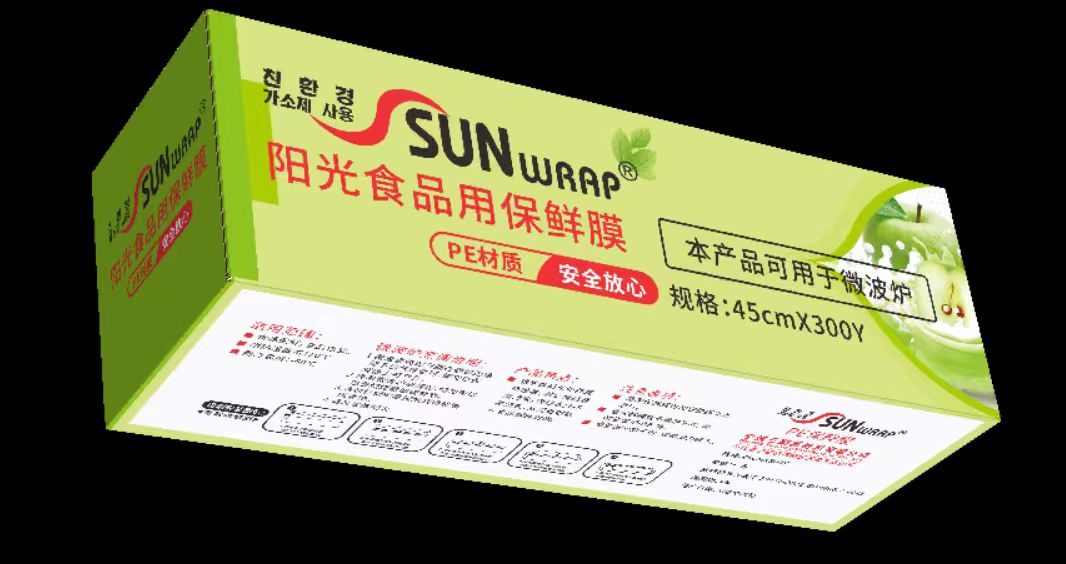
| Microwave | Yes, vented, with no fat or sugar contact | Usually yes, per label | Generally not recommended |
| Oven / stovetop | No | No | No |
| Freezer | Yes | Yes | Yes (freezer grades) |
| Residue risk | Some (adhesive) | Very low | Very low |
| Retail formats | 70 and 140 sq ft | 100–300 sq ft | 250 sq ft to 2,000 ft rolls |
| Cost per sq ft | ≈ $0.04–$0.07 | ≈ $0.015–$0.045 | ≈ $0.007–$0.02 |
Thickness of PE and PVC brands: America’s Test Kitchen measurements, converted from mils to microns. Microwave and oven rules come from the product package directions. Prices are typical US shelf and distributor prices for 2026 and vary by promotion.
Microwave, Freezer and Oven: What Each Film Tolerates
Press’n Seal. Glad’s directions allow microwaving if you turn back one corner to vent steam. Foods high in fat or sugar (bacon, pastries, cheese sauces) must not touch the wrap, because they get hot enough to soften polyethylene. The wrap is not for conventional or convection ovens, stovetops, toaster ovens or browning units. It can be used in the freezer.
PE cling wrap follows nearly the same rules, because it is the same base polymer. Leave a gap between the film and the food, and vent it.
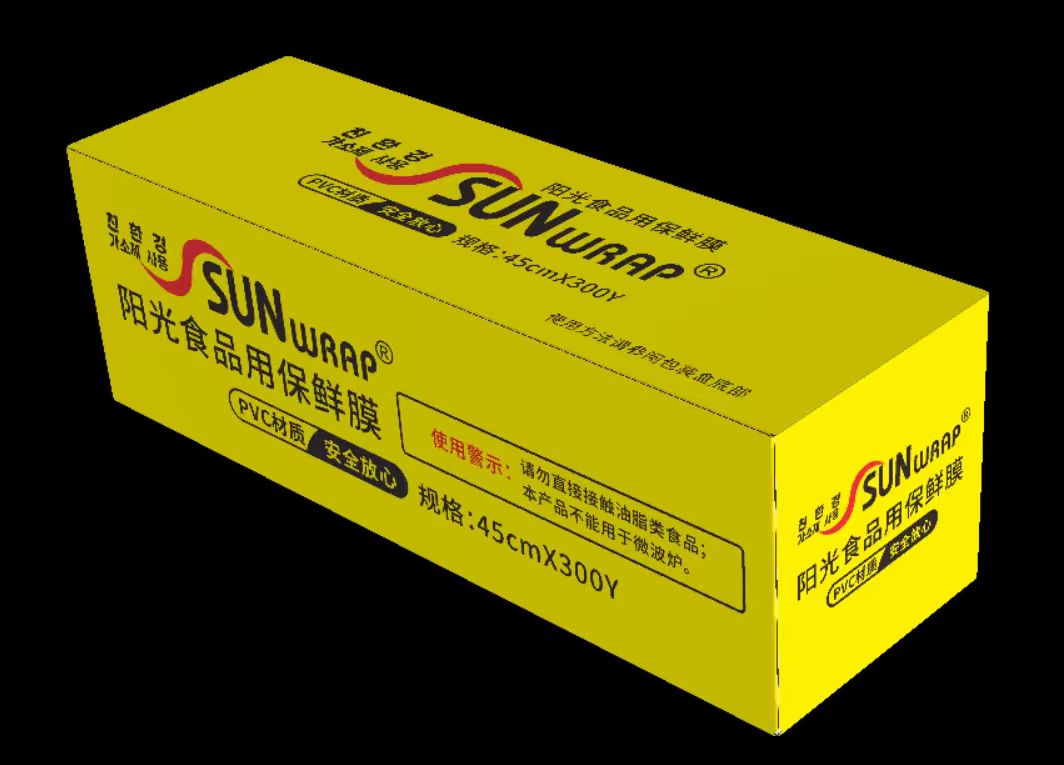
PVC cling film is the one to keep out of the microwave when it would touch food. Our own PVC retail box carries that warning. PVC is the best of the three for chilled display, freezer storage and cold-room use, where clarity and cling on cold, damp trays matter. For the full temperature limits, see our cling film temperature range guide and is plastic wrap oven safe?
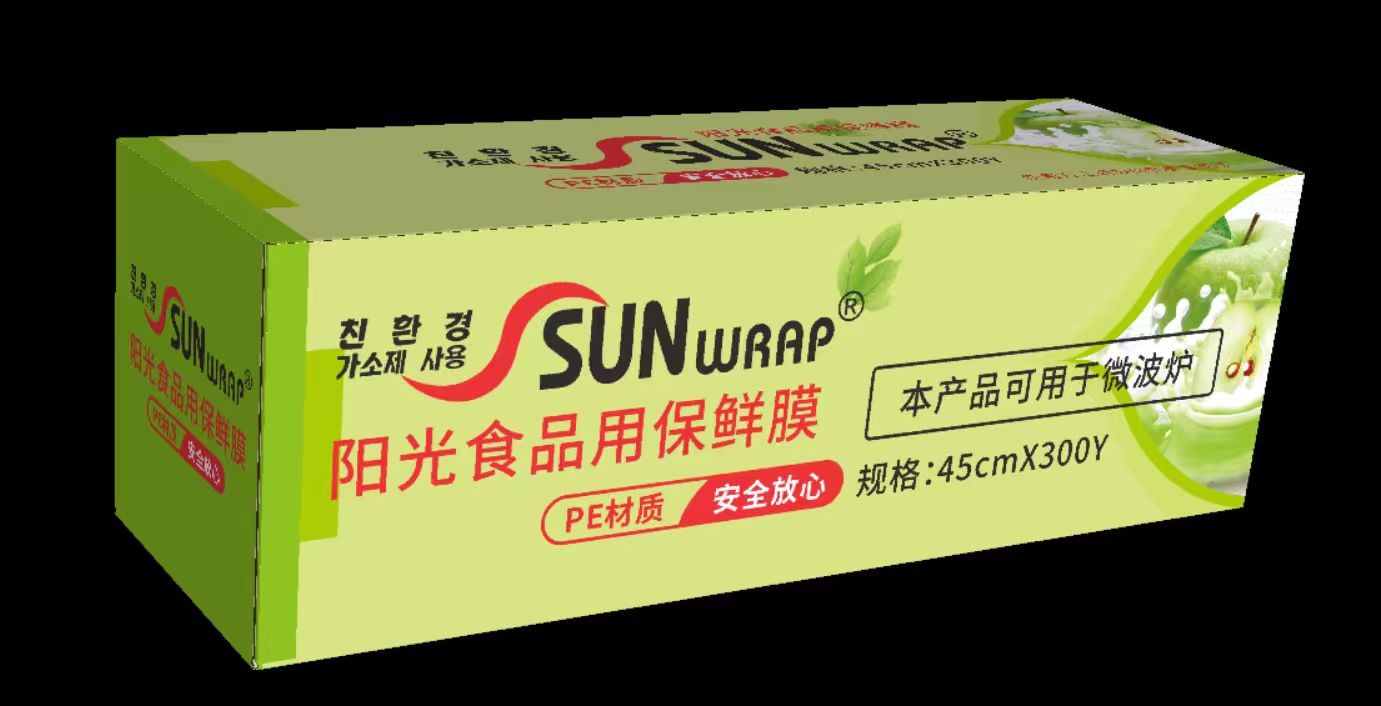 Check the box directions. Microwave rules depend on the polymer and the maker, not on the word “wrap”.
Cost Per Square Foot: Why Press’n Seal Costs More
Shoppers notice the price per box. A buyer should compare the price per square foot.
| Product | Typical box | Typical price | Cost per sq ft |
|---|---|---|---|
| Glad Press’n Seal | 70 sq ft | about $3–$5 | ≈ $0.04–$0.07 |
| Glad Press’n Seal | 140 sq ft | about $6–$8 | ≈ $0.04–$0.06 |
| Saran Premium (PE) | 100 sq ft | about $4.30 | ≈ $0.043 |
| Store-brand PE cling wrap | 200 sq ft | about $3 | ≈ $0.015 |
| Stretch-Tite Premium (PVC) | 250 sq ft | about $5 | ≈ $0.02 |
| Foodservice PVC film, 12–18 in × 2,000 ft | 2,000–3,000 sq ft | $20–$40 | ≈ $0.007–$0.013 |
The gap comes from the way the product is made. From the factory side:
- More film. A 25 µm PE film at 0.92 g/cm³ weighs about 23 g/m². A 10 µm PVC cling film weighs about 12.5 g/m², and Glad’s 7.6 µm cling wrap about 7 g/m². Press’n Seal starts with roughly 2–3 times the polymer per square foot.
- A second material. The adhesive is a separate coating with its own food-contact compliance work.
- A forming step. Cling film comes straight off a standard blown or cast line. Dimpled film has to be thermoformed on a patterned screen or drum, which adds equipment and slows the line.
What that means at kitchen volume: a café or deli using 100 sq ft of wrap a day uses about 36,500 sq ft a year. That costs ≈ $1,800 in Press’n Seal and ≈ $365 in foodservice PVC film. For the pricing model behind those numbers, see our cling film price guide and foodservice film cutter box guide.
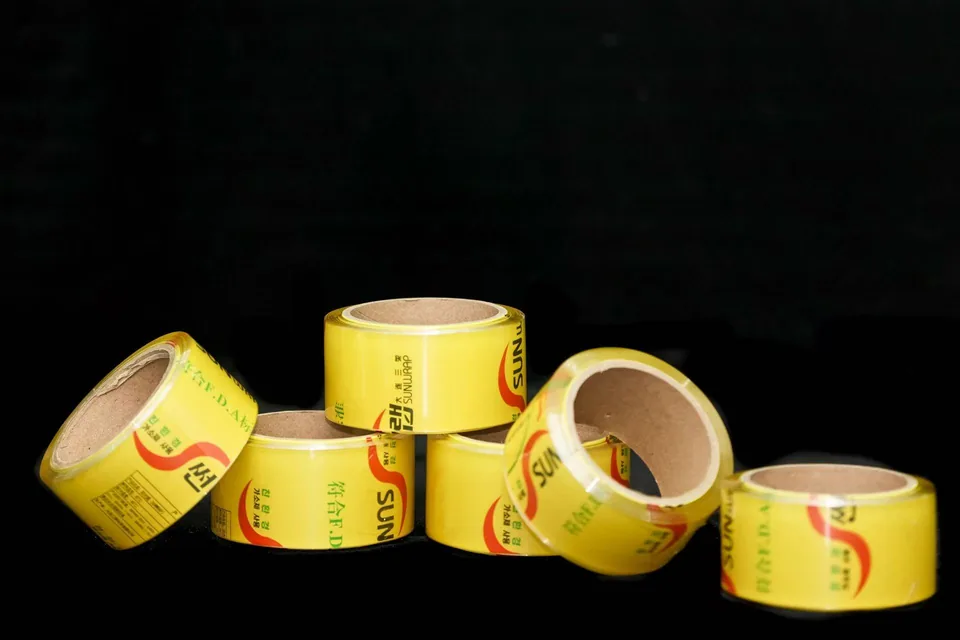 Foodservice rolls spread the cost over 2,000 ft. That format accounts for most of the difference in price per square foot.
When to Use Which (Home Kitchen and Commercial)
| Job | Best choice | Why |
|---|---|---|
| Sealing a plastic leftovers tub | Press’n Seal or PVC | PE cling slides off polypropylene |
| Covering a paper plate, wooden board or cardboard | Press’n Seal | Cling film does not grip porous surfaces |
| Making an improvised bag or portion pack | Press’n Seal | The adhesive bonds to itself |
| Covering a bowl of salad dressing or a damp tray | PVC cling film | Adhesive needs a dry surface |
| Wrapping meat, cheese or sandwiches tightly | PVC cling film | Stretches and conforms, no residue |
| Microwave reheating (vented) | PE cling or Press’n Seal | PVC should not touch hot food |
| Supermarket and deli tray overwrapping | PVC cling film | Clarity, anti-fog, machine and hot-plate compatible |
| Restaurant prep, 50–500 sq ft a day | PVC cling film, cutter box | 4–8× cheaper per sq ft |
For a home kitchen, keeping a box of each is reasonable. For a business, Press’n Seal only makes sense for the few jobs where adhesion matters more than cost.
Compliance Notes for Importers and Private-Label Buyers
If you are sourcing any of these films for resale, here is how the paperwork differs:
- PE film (cling wrap or the base film of a sealing wrap) is covered in the US by 21 CFR 177.1520 (olefin polymers). In the EU it falls under Regulation (EU) No 10/2011.
- PVC cling film needs its plasticizer covered as well, for example 21 CFR 178.3740 in the US and the specific migration limits for DEHA (18 mg/kg) and the plasticizer group limits under 10/2011. Our food-grade cling film certification guide has the full checklist.
- A food-contact adhesive is a separate item. In the US, pressure-sensitive adhesives in food packaging are addressed by 21 CFR 175.125. In the EU, adhesives have no harmonised positive list. They fall under the framework Regulation (EC) No 1935/2004, and the finished article must still meet the 10/2011 migration limits for its plastic layers. Ask any “press-and-seal type” supplier for the adhesive’s own declaration of compliance and a peel-residue test, not just a certificate for the PE film.
On private label: the original dimple patent has expired, but the equipment and adhesive know-how have not become commodities. Expect higher MOQs, fewer qualified suppliers and a price closer to the branded product than you would see with cling film. If your goal is a store-brand wrap at a competitive shelf price, a PVC or PE cling film private label is the practical route. See our private label cling film OEM guide and custom OEM cling film options.
The Bottom Line
- Press’n Seal holds with an adhesive. It wins on dry, odd-shaped or porous surfaces and for improvised bags. It costs 2–3 times more than branded cling wrap and 4–8 times more than foodservice film.
- Cling’n Seal and US Saran Wrap are both ordinary PE cling wraps. Thickness is the main difference between them.
- PVC cling film is the clearest, stretchiest and cheapest per square foot, and it clings best to damp and cold trays. That is why supermarkets and restaurants use it.
For the brand-by-brand data behind these numbers, read our best plastic wrap brands comparison.
Related Guides
- Best Plastic Wrap Brands 2026: Glad vs Saran vs Stretch-Tite
- Saran Wrap vs Cling Wrap: What’s the Difference?
- Stickiest Cling Film Revealed: PVC vs PE Tack Test
- Is Cling Film Microwave Safe? PVC vs PE Facts
- Cellophane vs Plastic Wrap: What’s the Difference?
Buying wrap by the pallet, not by the box? SUNWRAP manufactures food-grade PVC and PE cling film from 8 to 15 µm, in retail boxes, 2,000 ft foodservice cutter boxes and jumbo rolls, with private-label printing. Request a quote for cling film →
Need a cling film quote while you're reading?
Our export team responds within 12 hours with FOB Ningbo pricing. No obligation.
Frequently Asked Questions
What is the difference between Press'n Seal and cling wrap?+
Cling wrap holds through cling alone. The film is soft and smooth enough to grip glass, metal or itself on contact. Press'n Seal is a thicker polyethylene film. It carries a pressure-sensitive adhesive in the valleys between hundreds of tiny raised dimples. The dimples keep the adhesive off the surface until you press, then collapse so the adhesive bonds. That is why Press'n Seal grips paper, wood and plastic bowls that cling wrap slides off. It is also why it costs roughly 2–3 times more per square foot than branded cling wrap.
Is Cling'n Seal the same as Saran Wrap?+
They are the same type of product. Cling'n Seal is a name Glad has used for its ordinary cling wrap, not for Press'n Seal. In the US, both Glad's cling wrap and today's Saran Wrap are polyethylene (PE) cling films. The main difference is thickness. In America's Test Kitchen measurements, Glad Cling Wrap was about 7.6 microns, Saran Cling Plus about 10.7 microns and Saran Premium about 14.5 microns. Neither uses adhesive, so neither behaves like Press'n Seal.
Is Press'n Seal microwave safe?+
Glad's package directions say Press'n Seal can be used in the microwave if you turn back one corner to vent steam. Foods high in fat or sugar, such as bacon or pastries, must not touch the wrap, because they get hot enough to melt polyethylene. The same directions say it is not for conventional or convection ovens, stovetops, toaster ovens or browning units. Those rules are essentially the same as for PE cling wrap.
Why does Press'n Seal leave residue?+
The holding force comes from an adhesive layer. When the wrap stays pressed onto a surface for a long time, or is peeled from a rough or porous surface, some adhesive can stay behind. America's Test Kitchen marked Press'n Seal down for leaving residue. Ordinary cling wrap has no adhesive, so the worst it can leave is a trace of plasticizer or tackifier.
Can a factory make private-label Press'n Seal?+
Not easily. The original Procter & Gamble patent behind the dimple-and-adhesive design (US 5,662,758, filed 1996) has expired. Making the film still needs a thermoforming screen or drum, an adhesive-coating step and food-contact documentation for the adhesive. Few commodity film plants have that equipment. Most private-label programs therefore sell PVC or PE cling film, which both run on standard blown or cast film lines. SUNWRAP makes cling film only. We do not make adhesive sealing wrap.
Which is better for a restaurant or deli, Press'n Seal or cling film?+
Cling film, on cost and format. Press'n Seal is mainly sold in 70 and 140 square-foot retail boxes, and it works out at roughly $0.04–$0.07 per square foot. Foodservice PVC film comes in 2,000 ft cutter-box rolls at about $0.007–$0.013 per square foot. It also clings to wet, cold or greasy tray rims, where an adhesive struggles. A kitchen using 100 sq ft a day would spend about $1,800 a year on Press'n Seal against about $365 on foodservice PVC.
Is Press'n Seal recyclable?+
Generally not through curbside programs. It is a thin polyethylene film carrying an adhesive coating, and food-contaminated film is rejected by most store drop-off programs for plastic film as well. The same applies to used cling wrap of any polymer.
Sourcing cling film and have questions this article didn't answer?
Related articles
Best Plastic Wrap Brands 2026: Glad vs Saran vs Stretch-Tite
Glad, Saran, Reynolds, Stretch-Tite and Kirkland compared by what's inside the roll: PVC vs PE, thickness in microns, cost per sq ft and cling on plastic bowls.
Saran Wrap vs Cling Wrap vs Plastic Wrap — They're NOT the Same
Saran Wrap, cling wrap, and plastic wrap look identical but use different plastics (PVC vs PE vs PVDC). One is microwave-safe, one isn't. Factory comparison with thickness data.
Stickiest Cling Film Revealed: PVC vs PE Tack Test
PVC cling film grips 40% harder than PE — factory tack-force data by temperature. Which grade sticks best for meat, produce & deli prep? OEM spec guide: thickness, adhesion & compliance table. Samples available.