
Materials Guide
Cellophane vs Plastic Wrap: One Is Plant-Based, One Isn't
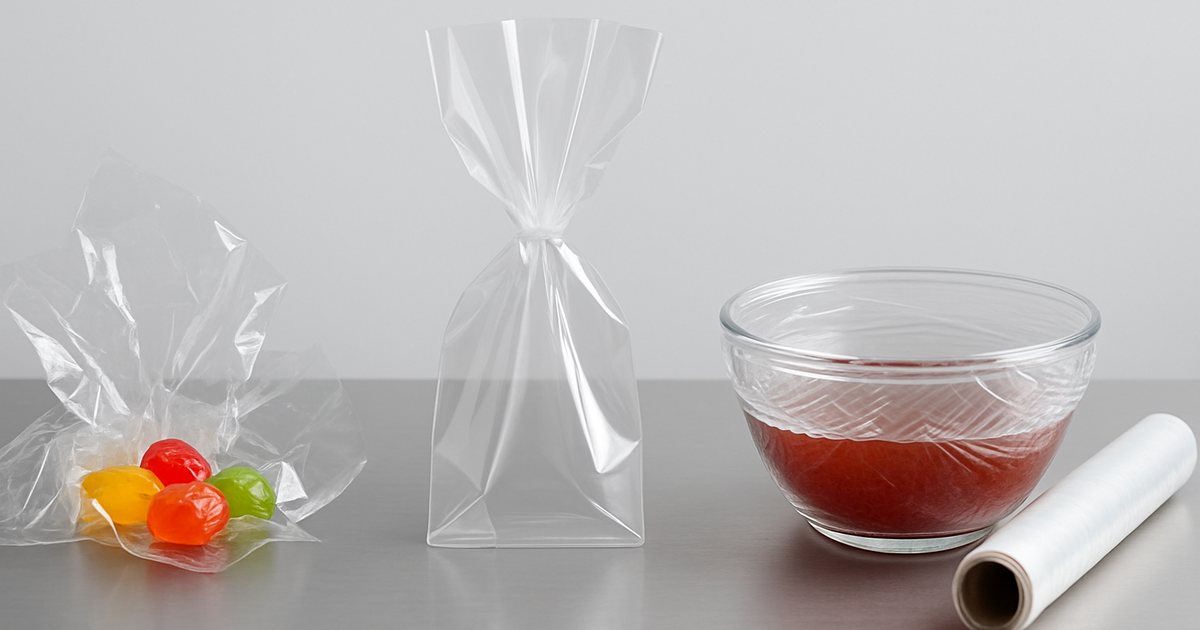
Cellophane vs Plastic Wrap: What’s the Real Difference?
Last Updated: 2026-10-13
Quick answer: Cellophane and plastic wrap are different materials. Cellophane is regenerated cellulose, made from wood or cotton pulp. It is stiff, crinkly, does not cling and lets water vapor pass unless it is coated. Plastic wrap (cling film) is a synthetic polymer, either PVC or PE. It stretches, clings to bowls and itself, and blocks moisture. Saran Wrap is plastic wrap, not cellophane. And most clear “cellophane” gift bags sold today are actually oriented polypropylene (OPP), a third material.
We manufacture PVC and PE cling film in China. We do not make cellophane or OPP bags, so we have no reason to oversell either one. Buyers regularly send us RFQs for “cellophane” when they really need cling film, and the reverse happens too. This guide covers what each film does, what it costs per square metre and how to tell them apart in 30 seconds.
Key takeaways
- Three materials hide behind one word. True cellophane (cellulose, ~1.44 g/cm³), OPP “cello” film (polypropylene, ~0.91 g/cm³) and cling film (PVC ~1.25–1.35 or PE ~0.92 g/cm³). A glass of soapy water separates them.
- Per square metre, cellophane uses 2.8× the material of PVC cling film. A 25 µm cellophane weighs about 36 g/m²; a 10 µm PVC cling film weighs about 13 g/m².
- “Cellophane” is not automatically compostable. Uncoated and cellulose-coated grades can be certified to EN 13432 and ASTM D6400; PVDC-coated grades are plastic-coated films under EU law (Directive 2007/42/EC).
Three Films, One Name: Cellophane, OPP and Cling Film
The confusion comes from language, not chemistry. Americans say “Saran Wrap” for any food wrap, florists say “cellophane” for any clear wrap, and gift shops label polypropylene bags “cello bags”. Three very different products end up described the same way.
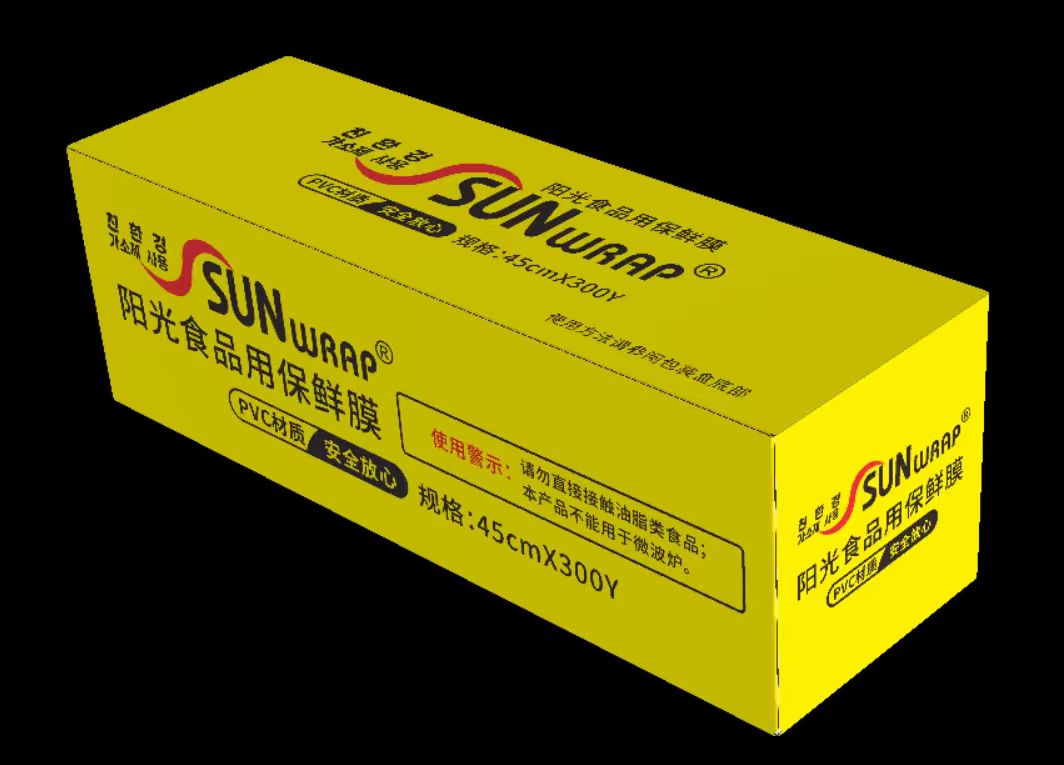
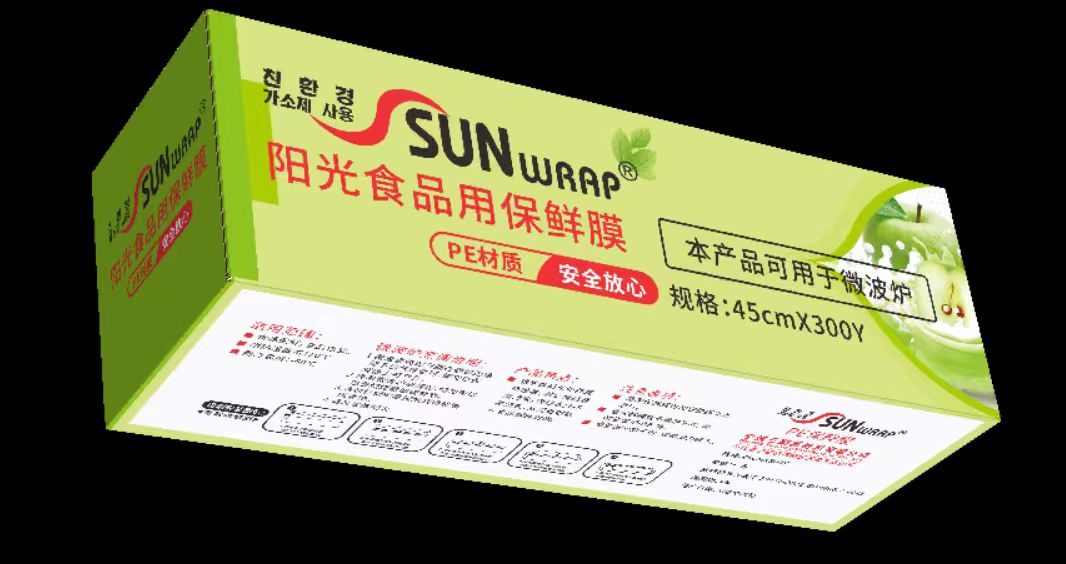
| True cellophane | OPP / BOPP “cello” film | PVC cling film | PE cling film | |
|---|---|---|---|---|
| Raw material | Regenerated cellulose (wood or cotton pulp) | Polypropylene | Polyvinyl chloride + plasticizer | Low-density / linear low-density polyethylene |
| Density | ~1.44 g/cm³ | ~0.91 g/cm³ | ~1.25–1.35 g/cm³ | ~0.92 g/cm³ |
| Typical thickness | 20–40 µm | 20–50 µm (bags often 1.2–2 mil) | 8–15 µm | 8–12 µm |
| Cling | None | None | Strong self-cling | Moderate (weak on plastic bowls) |
| Stretch | Very little, holds creases | Little, crisp | High, recovers like a balloon | High, necks and stays deformed |
| Water vapor | Passes through unless coated | Excellent barrier | Moderate (breathes slightly) | Good barrier |
| Heat behaviour | Does not melt; chars | Melts ~160–165 °C | Softens; not for microwave contact | Melts ~105–115 °C |
| Compostable? | Uncoated/cellulose-coated grades can be certified | No | No | No |
| Main uses | Candy twist wrap, cigars, specialty compostable packs | Gift bags, florist wrap, snack and bakery bags | Supermarket meat trays, catering, retail rolls | Household rolls, microwave covering |
Densities for PE, PP and PVC are standard resin values. The cellulose figure comes from a NatureFlex NK datasheet: 19.4 µm film at a yield of 35.7 m²/kg works out to 28.0 g/m², or 1.44 g/cm³.
What Is Cellophane, Exactly?
Swiss chemist Jacques Brandenberger invented cellophane in 1908. By 1912 he had built a machine to make it and named it from cellulose + diaphane (“transparent”). Whitman’s started wrapping its Sampler chocolates in it that same year. DuPont opened the first US cellophane plant in 1924.
The process is a cousin of rayon (viscose) fibre:
- Dissolve wood, cotton or hemp cellulose in alkali and carbon disulfide to make liquid viscose.
- Extrude it through a slit into a bath of dilute sulfuric acid and sodium sulfate. The cellulose re-forms as a film.
- Wash, bleach and soften the film. Glycerin is added as a plasticizer so it doesn’t turn brittle.
- Coat it if needed. Uncoated cellophane passes water vapor freely. In 1927 DuPont’s William Hale Charch developed a nitrocellulose lacquer that made it moisture-proof, and sales tripled between 1928 and 1930. Later grades used PVDC coatings.
Two facts from this process matter to buyers today:
- Carbon disulfide is highly toxic. Viscose plants vary widely in how much CS₂ their workers are exposed to. “Plant-based” does not mean clean manufacturing, so ask for the producer’s environmental data if a sustainability claim depends on it.
- The coating decides the product. US rules list cellophane as a regenerated cellulose base sheet plus approved coatings. Those include nitrocellulose and vinylidene chloride copolymer coatings (21 CFR 177.1200). The EU splits cellophane into uncoated, cellulose-coated and plastic-coated types under Directive 2007/42/EC. It also bans printed surfaces from touching food (Article 5).
One more naming trap: in the UK and many other countries, “Cellophane” is a registered trademark of Futamura Chemical UK Ltd in Wigton, Cumbria. In the US it is used as a generic word.
What Is Plastic Wrap (Cling Film)?
Plastic wrap is a thin synthetic film made to stretch over a bowl or tray and stay put without tape. Commercially, two polymers dominate:
- PVC cling film: polyvinyl chloride softened with a food-grade plasticizer (DEHA/DOA or ATBC, regulated in the US under 21 CFR 178.3740). The plasticizer runs through the whole thickness, which makes PVC the clingiest wrap. That is why supermarket meat counters and catering kitchens use it. See our PVC cling film specifications.
- PE cling film: low-density polyethylene (21 CFR 177.1520, olefin polymers). It clings through a tackifier additive, usually polyisobutylene. It has weaker cling but is chlorine-free and often labelled microwave-safe. See our PE cling film range.
The original Saran Wrap was a third polymer, PVDC. The US product switched to polyethylene around 2004. Our cling wrap vs Saran wrap vs plastic wrap guide covers that history. None of these is cellophane, and none ever was.
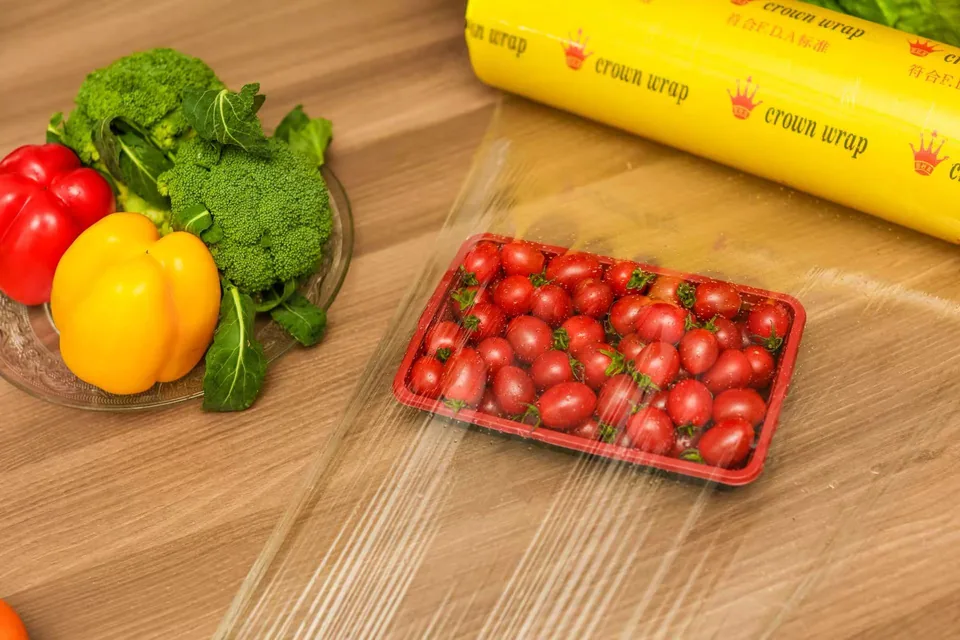
Cling film works because it is thin and soft. At 8–12 µm it drapes, stretches over a bowl rim and grips. Cellophane at 25 µm is about three times thicker and far stiffer, so it can only fold or twist. If your product needs to seal, as with leftovers, meat trays or a sandwich wrapped tight, you need cling film. For details on why PVC grips plastic containers and PE often doesn’t, read our cling force test guide.
Not sure which film your product needs? Send us the item, the pack format and the target market. We’ll tell you honestly whether it’s a cling film job, which gauge we’d run and the FOB price. If it isn’t a cling film job, we’ll say so. Request a quote →
Cost Per Square Metre: Why Cellophane Lost the Market
Cellophane sales have declined since the 1960s as cheaper petrochemical films took over. BOPP replaced it in most snack, candy and cigarette overwrap, mainly on cost and moisture barrier. The numbers explain why, even before you compare price per kilogram.
Film is bought by the kilogram but used by the square metre. Grams per square metre = thickness (µm) × density (g/cm³):
| Film | Typical gauge | g/m² | m² per kg | Material per m² vs PVC cling film |
|---|---|---|---|---|
| PE cling film | 10 µm | 9.2 | ~109 | 0.7× |
| PVC cling film | 10 µm | 13.0 | ~77 | 1.0× |
| BOPP film | 25 µm | 22.8 | ~44 | 1.8× |
| Cellophane | 25 µm | 36.0 | ~28 | 2.8× |
| Cellophane | 30 µm | 43.2 | ~23 | 3.3× |
Now add price per kilogram. IMARC put Chinese BOPP film at about US$1,233 per tonne in December 2025. That makes 25 µm BOPP roughly $0.028/m² at the mill. Our PVC cling film jumbo rolls sell at $1.20–2.00/kg FOB, so 10 µm costs about $0.016–0.026/m². Cellulose film costs more per kilogram than either commodity film, and it needs about 1.6× BOPP’s mass per square metre at the same gauge, so the gap compounds.
What this means for your purchase order: ask suppliers to quote $/m² or $/1,000 sheets at your exact size, never just $/kg. A cheap per-kilo quote for a heavier film can cost you more per pack. Our cling film price guide shows the same calculation for cling film gauges.
The 30-Second Float Test: Real Cellophane or OPP?
Many clear gift and bakery bags sold as “cellophane” or “cello” are oriented polypropylene. Bag suppliers say so openly, and retail listings often specify “100% OPP” under a “cellophane bags” title. That matters if you are paying a premium for compostability or making a plastic-free claim on your label.
The test uses density, which a supplier can’t fake:
- Cut a 2 × 2 cm square of the film.
- Fill a glass with water and add one drop of dish soap. Thin films trap air and float on surface tension, and soap breaks that.
- Push the square to the bottom and let go.
| Result | Material | Why |
|---|---|---|
| Floats up | PP (OPP/BOPP) or PE | Density 0.90–0.93 g/cm³, lighter than water |
| Sinks | Cellulose, PVC, PVDC or PET | Density 1.25–1.7 g/cm³ |
If it sinks, wet one side only. Uncoated cellophane softens and curls within seconds because cellulose absorbs water. Coated cellophane reacts more slowly, while PVC and PET stay flat. PVC cling film is also unmistakable by feel, since it stretches and clings to your fingers. Don’t use the burn test some websites suggest, because chlorinated and coated films give off toxic fumes.
For bulk orders, skip the kitchen chemistry and ask for the resin type and a named compostability certificate on the specification sheet. That’s what our own QC asks of every incoming material.
Compostability: Where Cellophane Genuinely Wins (and Where It Doesn’t)
This is the one area where true cellophane beats every cling film. Certified cellulose films such as Futamura’s NatureFlex grades meet EN 13432 and ASTM D6400 industrial composting standards, and several carry TÜV OK compost HOME. No PVC, PE or OPP film can claim that.
Three cautions before you put “compostable” on your packaging:
- The certificate belongs to the grade, not the word. A PVDC-coated cellophane is a plastic-coated film under Directive 2007/42/EC. Whether it is compostable depends on the coating and the certification, not on the base sheet.
- Inks and adhesives count. A compostable film printed with conventional inks or laminated with a non-compostable adhesive is no longer a certified pack.
- “Biodegradable” alone is a weak claim. Regulators in the EU, UK and several US states are tightening rules on unqualified environmental claims. Use the standard number and certificate ID.
If your goal is a lower-impact food wrap rather than a compostable one, compare options in our compostable and biodegradable cling film sourcing guide. It covers the PLA and PBAT “cling” films that sit between cellophane and conventional wrap.
Heat, Microwave and Moisture: Practical Differences
Heat. Cellulose has no melting point; it chars and decomposes instead. PE melts at roughly 105–115 °C and PP at about 160–165 °C. That doesn’t make ordinary cellophane an oven film. Futamura sells a specific NatureFlex grade (NVO) for conventional and microwave ovens, while craft and gift cellophane carries no such rating. For cling film heat limits, see our is plastic wrap oven safe guide and cling film temperature range chart.
Moisture. Uncoated cellophane passes water vapor, which is why it was traditional for cigars and crusty bread: moisture escapes instead of condensing. It is a poor choice for anything that must stay moist, such as cut fruit, cheese for long storage or raw meat. Cellophane helped launch self-service fresh meat retail, but PVC overwrap film replaced it because it seals the tray and clings to the meat surface. That application is now covered by our PVC cling film for meat and seafood guide.
Breathability on purpose. If you want controlled breathing for produce, mushrooms or bread, you don’t need cellophane. Perforated or ventilated PE and PVC films do it at a fraction of the cost. See our food grade ventilated film guide.
Which Should You Buy? A Decision Table
| Your application | Best film | Why |
|---|---|---|
| Covering bowls, plates, leftovers | PE or PVC cling film | Only cling film seals without tape |
| Supermarket meat, poultry, seafood trays | PVC cling film (machine or hand grade) | Strongest cling, anti-fog, oxygen transmission suits red meat bloom |
| Catering, HoReCa, sandwich wrapping | PVC cling film in cutter box or dispenser roll | Fast tear-off, tight wrap |
| Microwave covering (no food contact) | PE cling film labelled microwave-safe | Chlorine-free, no plasticizer migration concern |
| Gift baskets, florist wrap, candy bags | OPP/BOPP film | Crisp, glossy, cheap, good moisture barrier |
| Twist-wrapped sweets, cigars, compostable-claim packs | Certified cellulose film | Dead-fold twist, breathes, compostable if certified |
| Fresh produce needing airflow | Perforated PE/PVC film | Breathes at commodity price |
If your answer is in the first four rows, that’s what we make. SUNWRAP produces PVC cling film from 8 to 15 µm and PE cling film for retail boxes, catering rolls and jumbo rolls up to rewinder size. We supply FDA- and EU 10/2011-oriented specifications and private-label cutter boxes. Not sure between PVC and PE? Our film material selection guide walks through it.
Frequently Asked Questions
Is Saran Wrap cellophane?
No. Saran Wrap is a plastic film. It was originally PVDC and the US product has been polyethylene since around 2004. Cellophane is regenerated cellulose from wood or cotton pulp. Saran Wrap stretches and clings; cellophane is stiff, crinkly and doesn’t cling.
Is cellophane plastic?
Not in the usual sense. The base film is natural cellulose, not a petroleum polymer. But some grades carry plastic coatings such as PVDC, which the EU treats separately (Directive 2007/42/EC). And most “cello” bags in shops are OPP, which is plastic.
Can I use cellophane instead of plastic wrap to cover food?
Only for loose wrapping. Cellophane won’t cling to a bowl or seal around food. It suits dry or breathable items such as baked goods, candy and cigars. To seal a bowl or tray you need PVC or PE cling film.
Is cellophane biodegradable and compostable?
The cellulose is biodegradable. Uncoated and cellulose-coated grades can be certified to EN 13432 and ASTM D6400, and some carry OK compost HOME. Plastic-coated cellophane is a different case, so check for a named certificate on the spec sheet.
How can I tell if a “cellophane” bag is real cellophane?
Use the float test. Push a small square under soapy water: polypropylene and polyethylene float back up (density about 0.91–0.92 g/cm³), while cellulose sinks (about 1.44 g/cm³). Real cellophane also curls when wetted on one side.
Is cellophane microwave or oven safe?
Cellulose doesn’t melt; it chars. A few specialty cellulose films are sold as ovenable (for example NatureFlex NVO), but ordinary gift cellophane isn’t rated for cooking. For microwave covering, use a PE cling film labelled microwave-safe and keep it off the food surface.
Which is cheaper, cellophane or plastic wrap?
Plastic wrap, by a wide margin. A 25 µm cellophane weighs about 36 g/m² against 13 g/m² for 10 µm PVC cling film. That’s 2.8 times the material before the higher per-kilo price of cellulose film is counted.
Related Guides
- Cling Wrap vs Saran Wrap vs Plastic Wrap Explained
- Food Wrap Types: PVC vs PE vs PVDC
- When Was Cling Film Invented? 1933–2026 Timeline
- Compostable Food Wrap Sourcing Guide
- Stickiest Cling Film: PVC vs PE Tack Test
Get a Quote for PVC or PE Cling Film
SUNWRAP has manufactured PVC cling film in China since 2004 and added a PE line in 2025. Tell us your width, length, gauge, box format and destination market. We’ll reply with a specification sheet and FOB price, and we’ll tell you if your product is better served by a film we don’t make.
Need a cling film quote while you're reading?
Our export team responds within 12 hours with FOB Ningbo pricing. No obligation.
Frequently Asked Questions
Is Saran Wrap cellophane?+
No. Saran Wrap is a plastic film. It was originally PVDC (polyvinylidene chloride) and the US product has been polyethylene since around 2004. Cellophane is regenerated cellulose made from wood or cotton pulp. The two look alike, but Saran Wrap stretches and clings while cellophane is stiff, crinkly and does not cling at all.
Is cellophane plastic?+
Not in the usual sense. Cellophane is made from natural cellulose that is dissolved and re-formed into a film, so it is not a petroleum polymer. However, many cellophane grades carry a thin coating, and some of those coatings are plastics such as PVDC. The EU regulates plastic-coated cellophane differently for that reason (Directive 2007/42/EC). Also, most clear 'cello' bags sold for gifts and candy today are oriented polypropylene (OPP), which is a plastic.
Can I use cellophane instead of plastic wrap to cover food?+
Only for loose wrapping. Cellophane will not cling to a bowl or seal around food, so it cannot replace cling film for covering leftovers or wrapping meat. It works for wrapping dry or breathable items such as baked goods, candy, cheese or cigars, where some moisture exchange is acceptable or even wanted. To seal a bowl or tray, you need a cling film (PVC or PE).
Is cellophane biodegradable and compostable?+
The cellulose itself is biodegradable. Uncoated films and films with cellulose-based coatings can be certified compostable; for example, Futamura's NatureFlex grades are certified to EN 13432 and ASTM D6400, and several carry TÜV OK compost HOME. A cellophane with a plastic coating such as PVDC is a different case, so check for a named certification on the specification sheet instead of trusting the word 'cellophane'.
How can I tell if a 'cellophane' bag is real cellophane or polypropylene?+
Use a float test. Cut a small square, add a drop of dish soap to a glass of water and push the film under. Polypropylene (density about 0.91 g/cm³) and polyethylene (about 0.92) float back up. Cellulose film (about 1.44 g/cm³) sinks. Real cellophane also softens and curls when wetted on one side, while OPP stays flat and unaffected by water.
Is cellophane microwave or oven safe?+
Cellulose does not melt like PE or PP; it chars at high temperature instead. Some specialty cellulose films are sold for ovens; Futamura markets NatureFlex NVO for conventional and microwave ovens. Ordinary craft or gift cellophane is not rated for cooking, and coated, printed or OPP 'cello' films should not be heated with food. For microwave covering, a PE cling film rated microwave-safe is the practical choice.
Which is cheaper, cellophane or plastic wrap?+
Plastic wrap is much cheaper per square metre. A 10-micron PVC cling film weighs about 13 g/m² and a 10-micron PE film about 9 g/m², while a typical 25-micron cellophane weighs about 36 g/m². That is 2.8 times the material of PVC cling film before any price difference per kilogram. Cellulose film also costs more per kilogram than commodity BOPP or PVC, which is why BOPP replaced cellophane in most snack and candy packaging.
Sourcing cling film and have questions this article didn't answer?
Related articles
Compostable Food Wrap: Biodegradable Film Guide
Find compostable food wrap suppliers and biodegradable cling film manufacturers. Materials, certifications (EN 13432, BPI), cost comparison vs PVC/PE, MOQ and factory sourcing from China.
Saran Wrap vs Cling Wrap vs Plastic Wrap — They're NOT the Same
Saran Wrap, cling wrap, and plastic wrap look identical but use different plastics (PVC vs PE vs PVDC). One is microwave-safe, one isn't. Factory comparison with thickness data.
Food Wrap Types: PVC vs PE vs PVDC — Which Is Safest?
PVC clings hardest at $0.80/roll. PE is microwave-safe. PVDC costs 3x more. Side-by-side comparison of all 3 food wrap materials with FDA status, thickness data & bulk pricing. Factory direct →